This website uses various technologies including cookies for personalization, website usage and performance measurement, and targeted advertising. Information about your site visit may be stored by or shared with third parties as described in our Privacy Policy. By continuing to browse, you agree with our collection and disclosure of your information.
Cookie Settings
This website uses various technologies including cookies for personalization, website usage and performance measurement, and targeted advertising. Information about your site visit may be stored by or shared with third parties as described in our Privacy Policy. By continuing to browse, you agree with our collection and disclosure of your information.
Strictly Necessary
This website uses various technologies including cookies for personalization, website usage and performance measurement, and targeted advertising. Information about your site visit may be stored by or shared with third parties as described in our Privacy Policy. By continuing to browse, you agree with our collection and disclosure of your information.
This website uses various technologies including cookies for personalization, website usage and performance measurement, and targeted advertising. Information about your site visit may be stored by or shared with third parties as described in our Privacy Policy. By continuing to browse, you agree with our collection and disclosure of your information.
NO MINIMUM ORDER - SAME DAY SHIPPING
One or more installed browser plugins are blocking URL parameters. To properly calculate savings, or to checkout, you must disable it before you continue. Please click HERE after you disabled it to retest, or HERE for an instructional video
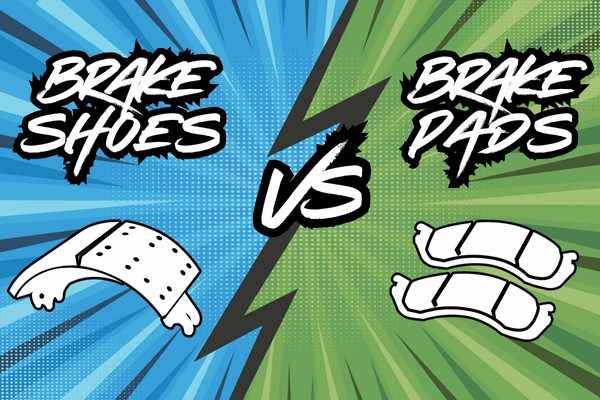
Brake shoes and brake pads share the same job: slowing a vehicle safely and reliably. But they do it through different braking systems. Shoes are part of drum brakes, while pads are used in disc brakes. That distinction matters because most differences between shoes and pads are directly related to the brake system they belong to.
Both systems remain widely used among commercial vehicles because each carries its own performance, cost, and maintenance advantages. In fact, many new trucks on the road today use a combination of both — discs on steer axles, drums on drives and trailers — to strike a balance between performance, uptime, and cost.
Our breakdown below looks more closely at how brake shoes and brake pads in these heavy-duty systems differ in function, maintenance, and long-term cost and what those differences mean for the people who rely on them every day.
What's the Difference Between Brake Shoes and Brake Pads?
The primary difference between brake shoes and pads is that they are used in different brake systems. Brake shoes are used in drum brakes, while brake pads are found in disc brake systems. Both perform the same fundamental task: converting kinetic energy into thermal energy (heat) through frictional force to slow or stop a vehicle.
Brake Shoes and Drum Brakes Explained
Drum brakes have been a mainstay in the trucking industry for over a century because they're cost-effective, durable, and well-suited for harsh environments.
In a drum brake system, the brake shoes have friction linings on their exterior surface (the side facing the drum).
When the driver applies the brakes, the shoes are pushed outward to press their linings against the inner surface of a rotating drum, generating friction to slow the wheel.
This method is effective, but the drum's enclosed design can trap heat and lead to brake fade under repeated heavy braking.
Brake Pads and Disc Brakes Explained
Air disc brakes (ADBs), meanwhile, have gained steady ground in the industry over the past two decades, largely because they deliver more consistent performance and are easier to inspect and service.
Disc brake systems use a rotor (disc) that's mounted parallel to the wheel, with brake pads positioned inside a caliper that straddles the rotor.
When brakes are applied, pistons within the caliper squeeze the brake pads inward (like a clamp) against both sides of the rotor, generating friction to slow the wheel.
Because the rotor is exposed to outside air, disc systems generally cool more efficiently and resist brake fade better under repeated heavy braking.
How Do Brake Shoes and Brake Pads Compare in Performance?
Brake pads in disc systems typically perform better than brake shoes in drum systems, particularly during repeated or heavy braking. That doesn't mean drum brakes are obsolete. They remain widely used across many applications because of their durability, lower upfront cost, and protection from contamination. The differences in stopping distance and braking efficiency come down to how each system applies force and how they respond to heat after repeated use.
Stopping Distance
Modern brake pads and brake shoes for heavy-duty and commercial vehicles are engineered to meet FMVSS 121 reduced stopping distance (RSD) requirements. While both systems are made to surpass the minimum requirements, disc brakes (pads/rotors) generally achieve shorter (better) stopping distances because of how calipers apply clamping force evenly and how consistently the friction surface engages.
Controlled tests and published industry data have shown that air disc brakes (ADBs) stop vehicles in shorter distances than drum brakes under similar load and road conditions, including wet surfaces. Vehicles with a hybrid disc/drum combination have also outperformed drum-only systems in measured stops.
In contrast, Bendix found that disc brakes shortened the average stopping distance by about 12%, or roughly 25 feet.
Bendix has also noted that during repeated braking (tested over 10 consecutive hard stops), the gap in stopping distance between discs and drums can widen further, ranging from 1–2 car lengths to as much as 75 feet, primarily due to cumulative brake fade in the drum system.
Brake Fade and Heat Management
Heat management plays a major role in these results. In a drum brake system, heat buildup causes the drum to expand outward, which reduces contact with the shoe lining and lowers braking efficiency — a condition commonly referred to as brake fade. Drum brakes are more prone to fade because their enclosed design traps heat.
In contrast, disc brakes have an open-air design that helps with cooling. More importantly, even when hot, disc rotors expand into the pads, maintaining contact as temperatures rise. This allows disc brakes to sustain performance over multiple high-energy stops, where drum brakes may gradually lose effectiveness.
Practical Impact
Performance differences show up most in demanding situations, such as emergency stops at highway speeds, long downhill runs, or heavy stop-and-go duty cycles. That said, drum brakes are still widely used because of their lower upfront cost and durability in harsh environments where dirt, debris, and moisture are factors.
Beyond performance metrics, there's also a difference in driver feel. Air disc brakes deliver a smoother, more linear response that many drivers describe as closer to a passenger car, offering predictable modulation and pedal feedback. Drum brakes, by comparison, tend to feel firmer and less progressive, with pedal response that can change as heat and load increase. This is due to the way the brake drum expands under high temperatures, slightly affecting shoe contact and braking response. Note that the actual driver feel can vary based on vehicle type and load, brake condition, friction material, and environmental factors.
Weather and Environment: How Conditions Affect Brake Shoes and Pads
Weather and road conditions can affect brake performance differently depending on whether the vehicle uses brake shoes or pads. Brake shoes inside drums are more shielded from the elements, while brake pads on discs are more exposed.
Drum Brakes: Enclosure Is a Double-Edged Sword
The enclosed design of drum brakes helps protect brake shoes and internal components from moisture, salt, and debris, which is an advantage in dirty or wet environments. The drawback is that if moisture or contamination does get inside, it can be tough to flush out. Water in the drum can reduce friction, and road salt or grit can accelerate corrosion and scoring. Over time, this can increase wear on both the brake shoe lining and the drum surface.
Disc Brakes: Exposure and Resilience
Disc brakes are more exposed to the elements, which makes pads and rotors more susceptible to rust and surface corrosion, particularly in wet or winter conditions. Moisture can temporarily reduce friction until the rotor surface dries. The open-air design, however, allows brake pads and rotors to dry quickly and "self-clean" their friction surfaces once the brakes are applied while driving. This helps disc brakes recover performance faster after environmental exposure.
Comparing the Trade-Offs
In wet conditions, discs usually recover quicker and maintain more consistent performance after exposure to water and dirt.
Drums can keep out more dirt and slush, but problems inside the housing can be harder to detect and fix.
Corrosion is a concern for both: Pads and rotors show it on the surface, while drums may conceal it until inspected.
Lifespan: What to Expect from Brake Shoes and Pads
The lifespan of brake linings — whether shoes or pads — can vary widely across fleets and vehicle types due to driving conditions and other factors. Everything from the lining material quality to road type, terrain, climate, vehicle weight, and braking frequency changes how quickly linings wear down.
Applications with less braking demand, like long-haul and on-highway trucks, may go far longer between brake shoe and pad replacements than vehicles in stop-and-go city or vocational duty cycles. Driver habits also play a role: Smooth braking can prolong lining life, while hard or inefficient braking accelerates lining wear.
A few takeaways and examples:
Because of so many external influences, there's no one-size-fits-all answer for how long brake shoes and pads can last on a truck or trailer.
Generally, for commercial vehicles using high-quality, application-matched linings, it's reasonable to expect the brake shoes and pads to last at least through their warranty period when properly maintained.
Minimum Brake Lining Thickness
Since "warranty life" and "real world life" often diverge, fleets should rely less on estimated lifespan and more on measurable wear. Federal standards require brake linings to be replaced once they reach 1/4" thickness (6.4 mm) for brake shoes and 1/8" (3.2 mm) for brake pads. Linings that are too thin can also result in out-of-service brake violations. Within fleets, brake wear tends to be consistent across vehicles that perform the same type of work, making it easier to predict service intervals and plan brake shoe or pad replacements in advance.
Brake Shoes and Pads: Maintenance & Inspection Considerations
All brake linings wear gradually and need routine inspection and replacement. Most brake shoes and pads make squealing noises and have wear indicators or sensors that signal when replacement is due. However, in practice, fleets usually replace them earlier during routine PM, typically once there's not enough lining left to make it safely to the next scheduled service.
If the shoes or pads are not replaced when the friction material is too thin or damaged, metal-on-metal friction can damage the surface of the brake rotor or drum, leading to added repair time and cost.
Brake Pads: Replacement and Service
Brake pads are usually quicker to replace than brake shoes, often requiring only wheel removal to access the caliper. A brake pad swap can take as little as 15–20 minutes per wheel end. However, if the rotor assembly also requires replacement, the job is much more complex and time-consuming, taking over an hour per wheel. In such cases, the wheel hub and bearings must be removed, seals replaced, and the system reassembled.
Brake Shoes: Replacement and Service
On a commercial truck, brake shoe replacement can take an hour or more per wheel end. Shoes take more time because they sit inside the brake drum surrounded by springs and other components, so the job involves removing the wheel and drum, cleaning out debris, and inspecting the hardware. That said, the enclosed design of drum brakes offers some protection from debris and moisture.
Cost of Brake Shoes vs. Pads
Brake pads typically cost more than brake shoes. However, the actual cost difference is tied to the brake systems (drum or disc) they belong to. Each type brings a different balance of upfront price, replacement part cost, and long-term service expense.
Drum brakes are the traditional system for heavy-duty trucks, and their lower cost and durability keep them a solid, cost-effective choice in many applications. Disc brakes come with a higher upfront price, but their service advantages can reduce costs over the long run. Many new trucks now use a combination of both — discs on steer axles, drums on drives and trailers — to achieve an optimal balance of performance vs. cost.
How the cost balance works out often depends on the vehicle's age, turnover cycle, and duty profile.
Drum Brakes (Lowest Cost, Upfront Value)
Drum brakes with shoes are less expensive up front, widely available, and proven in service. Even with the performance advantages of discs, drum systems are still common on tractor trucks and on most trailers. They're often favored in vocational and mixed-use applications where cost and durability outweigh service needs.
Disc Brakes (Higher Cost, Long-Term ROI)
Disc brake systems and pads generally cost more up front, but the cost equation can shift over time. Pads are quicker to replace than shoes, especially when rotors don't require service. Disc systems also support faster brake inspections and pad condition checks, which can streamline PM schedules. That reduces labor hours and gets vehicles back on the road faster.
Hybrid Disc/Drum Setups (Balanced Cost and Performance)
Hybrid setups with disc brakes on steer axles and drums on drive and trailer axles are a common compromise for operators. This approach gives fleets added stopping performance where it matters most without the full cost of spec'ing discs across the vehicle.
Fleet Age and Trade Cycles
The age of a fleet's vehicles and their trade cycle also matters. Fleets that cycle trucks every few years may never realize the full cost return on disc brakes if the friction linings outlast the vehicle's service life. On the other hand, uptime-sensitive fleets and operators that hold onto vehicles longer are more likely to benefit from the service advantages of pads and discs.
Brake Shoes vs. Pads: Application Fit (Tractors, Vocational, Buses, Trailers)
The pros and cons of drum/shoe vs. disc/pad systems can play out differently across vehicle types and duty cycles. Drum brakes have long been the traditional system for heavy-duty trucks, and their lower price keeps them a cost-effective option in many applications.
Air disc brakes have been steadily adopted within the industry over the past two decades due to their safety and maintenance benefits, as well as federal changes to reduced stopping distance (RSD) requirements in 2011. Today, many OEMs (Freightliner, Volvo, International, etc.) offer ADBs as standard on steer axles and optional on drive axles, reflecting the growing shift in the industry.
Linehaul / long-haul tractors often are ideal candidates for disc systems: long stretches of highway braking, fewer stops, and greater emphasis on performance, consistency, and driver satisfaction push spec toward ADB or hybrid systems.
Vocational trucks (refuse, dump, mixer, service trucks) frequently operate in harsh, dirty, stop-and-go environments. Drums/shoes remain appealing here for their low cost, durability, and resistance to contamination.
Trailers still heavily use drum systems due to cost, simplicity, and lower weight sensitivity. However, ADBs are creeping into trailer applications, especially in higher-end or safety-oriented fleets.
Buses / transit may favor disc systems for smoother stops, reduced vibration, and consistent braking feel (important for passenger experience).
Many fleets adopt mixed systems: disc brakes on steer axles, shoes on drive or trailer axles. This can strike a balance between cost, performance, and compatibility with existing infrastructure.
When It's Time to Replace
Brake shoes and pads each bring distinct strengths. When it's time to replace, matching the correct friction material and hardware to your application matters just as much as the system itself. If you're unsure which parts fit your truck or trailer, our team at JIT Truck Parts can help you cross-reference part numbers and verify the right aftermarket replacements for hydraulic and air brake systems. Explore our full-line of brake parts from popular brands like Match Made, Haldex, Meritor, Bendix, and more.