This website uses various technologies including cookies for personalization, website usage and performance measurement, and targeted advertising. Information about your site visit may be stored by or shared with third parties as described in our Privacy Policy. By continuing to browse, you agree with our collection and disclosure of your information.
Cookie Settings
This website uses various technologies including cookies for personalization, website usage and performance measurement, and targeted advertising. Information about your site visit may be stored by or shared with third parties as described in our Privacy Policy. By continuing to browse, you agree with our collection and disclosure of your information.
Strictly Necessary
This website uses various technologies including cookies for personalization, website usage and performance measurement, and targeted advertising. Information about your site visit may be stored by or shared with third parties as described in our Privacy Policy. By continuing to browse, you agree with our collection and disclosure of your information.
This website uses various technologies including cookies for personalization, website usage and performance measurement, and targeted advertising. Information about your site visit may be stored by or shared with third parties as described in our Privacy Policy. By continuing to browse, you agree with our collection and disclosure of your information.
NO MINIMUM ORDER - SAME DAY SHIPPING
One or more installed browser plugins are blocking URL parameters. To properly calculate savings, or to checkout, you must disable it before you continue. Please click HERE after you disabled it to retest, or HERE for an instructional video
Brake pads play a central role in every disc brake system, providing the friction that converts motion into heat and brings heavy vehicles safely to a stop. Their composition and construction determine how effectively that heat is managed, how long the pads and rotors last, and how consistent braking feels over time.
For fleets and service operations across medium- and heavy-duty trucks, understanding the main brake pad types helps ensure predictable performance and reduced wear. The right friction material can maintain stopping power, resist fade under heat, and extend component life across a wide range of loads and duty cycles.
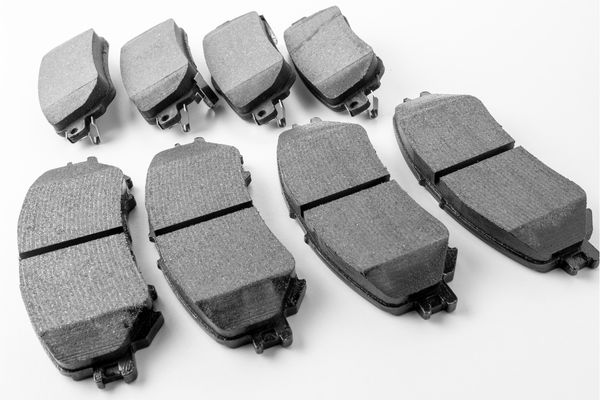
Every heavy-duty disc brake pad is made up of two key components: the friction block and the backing plate. The friction block is the working surface that contacts the rotor, generating the friction required to slow the vehicle. The backing plate provides the structural foundation, evenly distributing pressure across the pad and transferring braking force from the caliper.
Modern heavy-duty pads may also include shims or insulators to reduce vibration and prevent noise. Many pads feature corrosion-resistant coatings or plated backing surfaces to prevent rust jacking between the plate and friction material, which can lead to separation or uneven wear.
Some air-disc brake (ADB) pads also feature mechanical or electronic wear indicators that signal when the friction material has reached its minimum thickness. These indicators help fleets perform timely replacements before pad material is exhausted, preventing rotor scoring or out-of-service violations.
Friction Material Types for Heavy-Duty Brake Pads
Not all brake pads are built the same. The composition of the friction material determines how well a pad manages heat, noise, and wear under different operating conditions. In commercial and fleet service, most pads fall into one of four main categories.
Non-Asbestos Organic (NAO)
NAO pads use a mix of fibers, binders, and fillers that contain little or no metallic content. They provide smooth, quiet operation and are gentle on rotors, but they can't handle high heat as effectively as metallic compounds. For that reason, they're most often used on medium-duty or regional trucks where braking demands and temperatures remain moderate.
Cons: Shorter pad life and reduced fade resistance in heavy or high-heat service.
Semi-Metallic
Semi-metallic pads are the standard choice for most heavy-duty air-disc brake systems. They blend metallic fibers (such as steel, copper, or iron) with resins and friction modifiers to balance stopping power, temperature stability, and wear characteristics. These are the most widely used pad type in both line-haul and regional heavy-duty fleets.
Pros: Excellent heat tolerance, consistent friction, balanced wear life.
Cons: Can produce more dust and rotor wear than organic materials.
High-Metallic / Severe-Duty
High-metallic pads contain a greater concentration of metal to withstand repeated heavy braking and high temperatures. They're designed for trucks that see constant braking loads, such as refuse, construction, and off-road vocational service.
Pros: Outstanding fade resistance, high braking stability, long service life under extreme duty.
Cons: Can increase rotor wear and brake noise on lighter-duty vehicles.
Ceramic / Hybrid Blends
Ceramic or hybrid formulations combine ceramic fibers with metallic and organic components. These pads maintain stable friction over a wide temperature range and resist fade, even during extended downhill or stop-and-go operation. Though more expensive, these pads are often favored in modern air-disc systems that prioritize long life and consistent braking performance.
Pros: Low dust, steady friction under heat, extended pad life.
Cons: Higher cost and potential for increased rotor wear under severe loads.
Many modern heavy-duty pads also use low-copper or copper-free blends to meet environmental regulations without sacrificing temperature stability or performance.
Friction Ratings and Brake Pad Performance
Every heavy-duty brake pad is rated according to SAE J866, an industry standard that measures how consistently a pad maintains friction under both cold and hot operating conditions. Each pad carries a two-letter code, such as EE, EF, or GG, representing its average coefficient of friction across two temperature ranges.
E: Moderate friction (≈ 0.25–0.35)
F: Medium friction (≈ 0.35–0.45)
G: High friction (≈ 0.45–0.55)
The first letter shows the pad's performance when cold (around 200° to 400° F), and the second represents its behavior at high temperature (around 400° to 650° F). For example, an "FF" pad performs consistently hot or cold, while an "FG" pad provides slightly higher friction as temperatures climb.
These ratings reflect friction behavior, not material type. A semi-metallic pad and a ceramic pad may both carry the same friction code even though their composition and feel differ. When replacing pads, fleets should match or exceed the original friction rating to maintain proper braking balance across the axle.
FMSI Numbers and Pad Identification
Every heavy-duty brake pad design is assigned an FMSI number, a standardized reference created by the Friction Materials Standards Institute. This number identifies the pad design and application fit, ensuring compatibility of replacement parts across different manufacturers.
Unlike friction ratings, which describe performance, the FMSI number defines the pad's specifications, including its length, height, shape, and hardware attachment points. These identifiers make it easier to cross-reference parts between OEM, aftermarket, and private-label suppliers without relying on proprietary numbering systems.
Verifying the correct FMSI number before ordering confirms that the pad fits the intended caliper model and rotor width, preventing issues with clearance or uneven pad wear.
Reliable Brake Pad Options for Heavy-Duty Fleets
Brake pads wear differently depending on how and where a truck is driven, but the goal is the same: consistent stopping power, predictable wear, and fewer mid-cycle service calls. Choosing a pad with the right friction level and fit for your application keeps braking balanced and downtime low.
Fleet-tested brands like Match Made, Bendix, Haldex, and Meritor manufacture pads engineered for modern air-disc systems and a range of duty cycles, from on-highway tractors to severe-duty vocational trucks. Replacing pads at the right interval and using parts built to your brake system's specifications helps protect rotors and extend overall brake life.
When your fleet is due for replacement, explore our full selection of heavy-duty brake pads from leading brands to find the right fit for your application.