This website uses various technologies including cookies for personalization, website usage and performance measurement, and targeted advertising. Information about your site visit may be stored by or shared with third parties as described in our Privacy Policy. By continuing to browse, you agree with our collection and disclosure of your information.
Cookie Settings
This website uses various technologies including cookies for personalization, website usage and performance measurement, and targeted advertising. Information about your site visit may be stored by or shared with third parties as described in our Privacy Policy. By continuing to browse, you agree with our collection and disclosure of your information.
Strictly Necessary
This website uses various technologies including cookies for personalization, website usage and performance measurement, and targeted advertising. Information about your site visit may be stored by or shared with third parties as described in our Privacy Policy. By continuing to browse, you agree with our collection and disclosure of your information.
This website uses various technologies including cookies for personalization, website usage and performance measurement, and targeted advertising. Information about your site visit may be stored by or shared with third parties as described in our Privacy Policy. By continuing to browse, you agree with our collection and disclosure of your information.
NO MINIMUM ORDER - SAME DAY SHIPPING
One or more installed browser plugins are blocking URL parameters. To properly calculate savings, or to checkout, you must disable it before you continue. Please click HERE after you disabled it to retest, or HERE for an instructional video
"Truck" is a vague term that's commonly applied to every type of truck, whether it's a smaller pickup truck or a large 18 wheeler truck. But we all know that a city garbage truck and the Chevy truck you use for weekend fishing are not the same truck. You can't compare a Freightliner Cascadia to a Toyota Tacoma, which is why there are truck classes to more easily categorize all "trucks" you see on a daily basis.
There are eight (technically nine, but we'll get to that later) classes of trucks that range from weight to duty classifications. These classes do matter, not only because they determine what parts you'll need for your vehicle, but also because they can also affect part warranties, what you're allowed to drive as a truck driver, and more.
How Does Truck Classification Work
How do trucks get classified? It may seem like the little ones get little numbers and the big ones get bigger numbers, but it's a little more complicated than that. Truck classification is based on the Gross Vehicle Weight Rating (GVWR), which is a government guideline for truck manufacturers.
GVWR is the truck's own weight plus what it's able to carry when it's fully loaded, including cargo, passengers, fuel, and other factors. GVWR is not just a fun fact to know about your truck, it's used for safety purposes and for vehicle registration.
Why Does Truck Class Matter Again?
For heavy-duty applications, a commercial driver's license (CDL) is required. Because different classes of vehicles require varying amounts of skill to safety operate and maneuver, the Federal Highway Administration requires drivers to get a license that's designated for specific truck classes.
As far as truck parts go, the higher the class, the higher the warranty in many cases. The bigger your truck is, the more strength it needs from its parts to operate smoothly. That accrues more wear and tear, meaning that heavier truck parts are built to last longer. Knowing the classes of your truck or fleet can give you an advantage when shopping for truck parts and also ensures that you make the best buying decisions.
Truck classifications are also used in other areas, including:
Permit requirements. If you're hauling a large or oversized load, signs or markers may be required before you drive.
Weight station requirements. Heavier trucks in higher classes are required to stop at weigh stations while on the road.
Maintenance needs. Telling a service technician that you have a truck that needs to be repaired may result in them being unprepared when you show up with a big rig. But if you tell them you're bringing a Class 8 truck in, they'll know what tools to have ready.
DOT number requirements. If your vehicle is over a certain weight, you will be required to have the DOT numbers on both sides instead of just one.
Hours of Service Laws. Vehicles over a certain weight also have specific Hours of Services laws that apply to them.
What are the Truck Classes?
CLASSES 1-2 (LIGHT DUTY)
Light-duty classes generally refer to non-commercial vehicles, such as pickup trucks and larger SUVs. Ford F-150s, Dodge Rams, and Toyota Tacomas typically fall under this distinction. If you're borrowing your cousin's truck to move, this is probably the class of truck you were driving.
CLASS 2A AND 2B
There's a slight difference between Class 2A and 2B when you move up to the medium-duty categories. Trucks like Ford F-150s, Chevy Silverado 1500s, and Dodge Ram 1500s are considered class 2A while Ford F-250s, Chevy Silverado 2500s, and Dodge Ram 2500s are considered class 2B.
LIGHT DUTY WEIGHT RUNDOWN
Class 1: 6,000 lbs. and Under
Class 2A: 6,001 lbs. to 8,500 lbs.
Class 2B: 8,501 lbs. to 10,000 lbs.
CLASSES 3-6 (MEDIUM-DUTY)
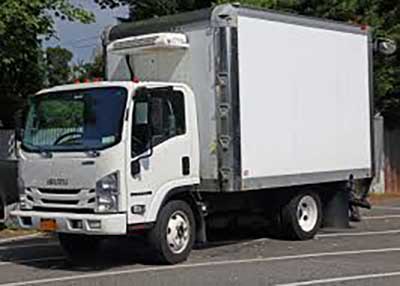
With Class 3 and 4 trucks, we start to get into the Ford Super Duty Models and the heavier commercial pickups. These are the big ones that you'll see in and out of the construction sites with a payload full of gravel. In these classes, you'll also start to see some of the more standard commercial trucks, like Isuzu NPR models or the International TerraStar.
MEDIUM-DUTY WEIGHT RUNDOWN
Class 3: 10,001 lbs. to 14,000 lbs.
Class 4: 14,001 lbs. to 16,000 lbs.
Class 5: 16,001 lbs. to 19,500 lbs.
Class 6: 19,501 lbs. to 26,000 lbs.
CLASS 7-8 (HEAVY-DUTY)
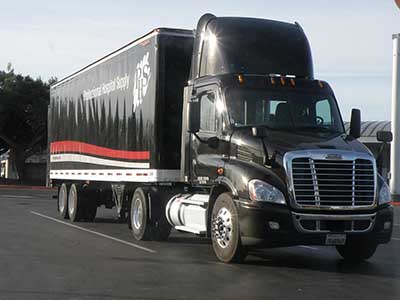
Now we're getting into the real big rigs and semi-trucks. This includes the heavy-duty Autocar ACX Garbage Trucks and Autocar DC semis. These are where you see some of the biggest commercial vehicle brands - Freightliner Cascadia, Kenworth T600, International Workstar, and Peterbilt trucks are just a few of the major models that fall into this category.
HEAVY-DUTY WEIGHT RUNDOWN
Class 7: 26,001 lbs. to 33,000 lbs.
Class 8: 33,001 lbs. and Up
Is There a Class 9 Truck?
Technically, yes. There are also vehicles that defy classification on a case-by-case basis. These oversized load vehicles often have special signs or markers on the truck and may be required to drive down specific routes for safety purposes.
Truck Distinctions: Key Points
Understanding truck classes can help you make better buying decisions for your truck or fleet
Different truck classes can have different permit, weight station, DOT number, and maintenance requirements
The higher the GVWR of your truck, the higher the class
Although there are eight distinct truck classes, there is also an open-ended ninth class for trucks that cannot be classified